Ever wondered who truly invented 3D gaming? It is not a simple answer. The journey from flat sprites to immersive 3D worlds involved many innovators. From early vector graphics to polygon rendering, countless brilliant minds contributed to this revolution. This article explores the key figures and technological milestones. We will uncover the real story behind 3D gaming's evolution. Discover the pivotal games and developers. See how they shaped the interactive entertainment we enjoy today. Get ready to dive deep into the fascinating past of three-dimensional virtual worlds. This deep dive focuses on the key moments that made 3D gaming a reality for millions across the USA and beyond.
Who is considered the pioneer of 3D gaming?
While no single inventor exists, John Carmack of id Software is often cited as a key pioneer. His work on engines for Wolfenstein 3D and Doom in the early 1990s revolutionized accessible real-time 3D graphics. This made immersive 3D gameplay widespread and influential for future titles.
What was the first commercial video game with 3D graphics?
Atari's arcade game Battlezone, released in 1980, is widely considered the first commercial video game featuring true 3D wireframe graphics. Players navigated a tank through a vector-graphic battlefield. This created an impressive sense of depth and realism for its era. It paved the way for future 3D developments.
When did 3D gaming become mainstream?
3D gaming began to become mainstream in the mid-1990s. Titles like Wolfenstein 3D (1992) and Doom (1993) popularized real-time 3D first-person perspectives. This was further accelerated by consumer graphics cards in the late 1990s. These hardware advancements made complex 3D rendering accessible to home PC users.
How did early 3D games achieve their depth perception?
Early 3D games utilized various techniques for depth perception. Wireframe graphics, as seen in Battlezone, drew lines to define objects in 3D space. Later games used polygonal rendering with flat-shaded surfaces, like in Virtua Fighter. Clever programming and perspective projection created the illusion of depth before dedicated hardware became common.
What role did id Software play in the development of 3D gaming?
id Software played a monumental role in shaping modern 3D gaming. Through John Carmack's innovative game engines, they released Wolfenstein 3D and Doom. These games established the first-person shooter genre and demonstrated powerful, real-time 3D graphics. Their technology significantly influenced countless games and developers for decades, setting industry standards.
When we talk about who invented 3D gaming, it is not about one person. Instead, it is a fascinating story of innovation, collaboration, and technological leaps. The concept of creating a sense of depth in video games has roots stretching back decades. It involved visionary programmers, engineers, and designers. This journey began with simple wireframe models. It evolved into the complex, immersive worlds we explore today.
Understanding 3D gaming means recognizing a collective effort. Various breakthroughs across hardware and software made it possible. From university labs to game development studios, many played crucial roles. The path to modern 3D gaming was paved by numerous groundbreaking achievements. These innovations ultimately transformed how we interact with digital entertainment.
The Early Seeds of 3D Gaming
The idea of three-dimensional graphics began far before video games. Early computer graphics research in the 1960s laid vital groundwork. Individuals like Ivan Sutherland created foundational concepts. His work on Sketchpad showed how computers could draw interactive graphics. These early experiments were critical. They provided the theoretical basis for visual depth.
Early arcade games began to dabble in perspective. Games like Spacewar! hinted at spatial relationships. These early steps, while rudimentary, sparked imaginations. They set the stage for more advanced 3D representations. The journey to true 3D gaming was a gradual one.
Pioneering Software in 3D Gaming
Some of the earliest games to offer a sense of 3D were vector graphics titles. Atari's 1980 hit, Battlezone, is a notable example. It presented a wireframe battlefield, creating an impressive feeling of depth. This arcade classic was a significant step forward. It showed the potential for interactive 3D environments. Another key title was Elite in 1984. This space trading game featured solid 3D graphics on home computers. Elite pushed boundaries for immersive gameplay.
These games demonstrated that 3D was not just a novelty. It could enhance gameplay and player immersion. Developers started exploring various techniques. They aimed to create convincing virtual spaces. The quest for more realistic 3D gaming was underway.
id Software's Impact on 3D Gaming
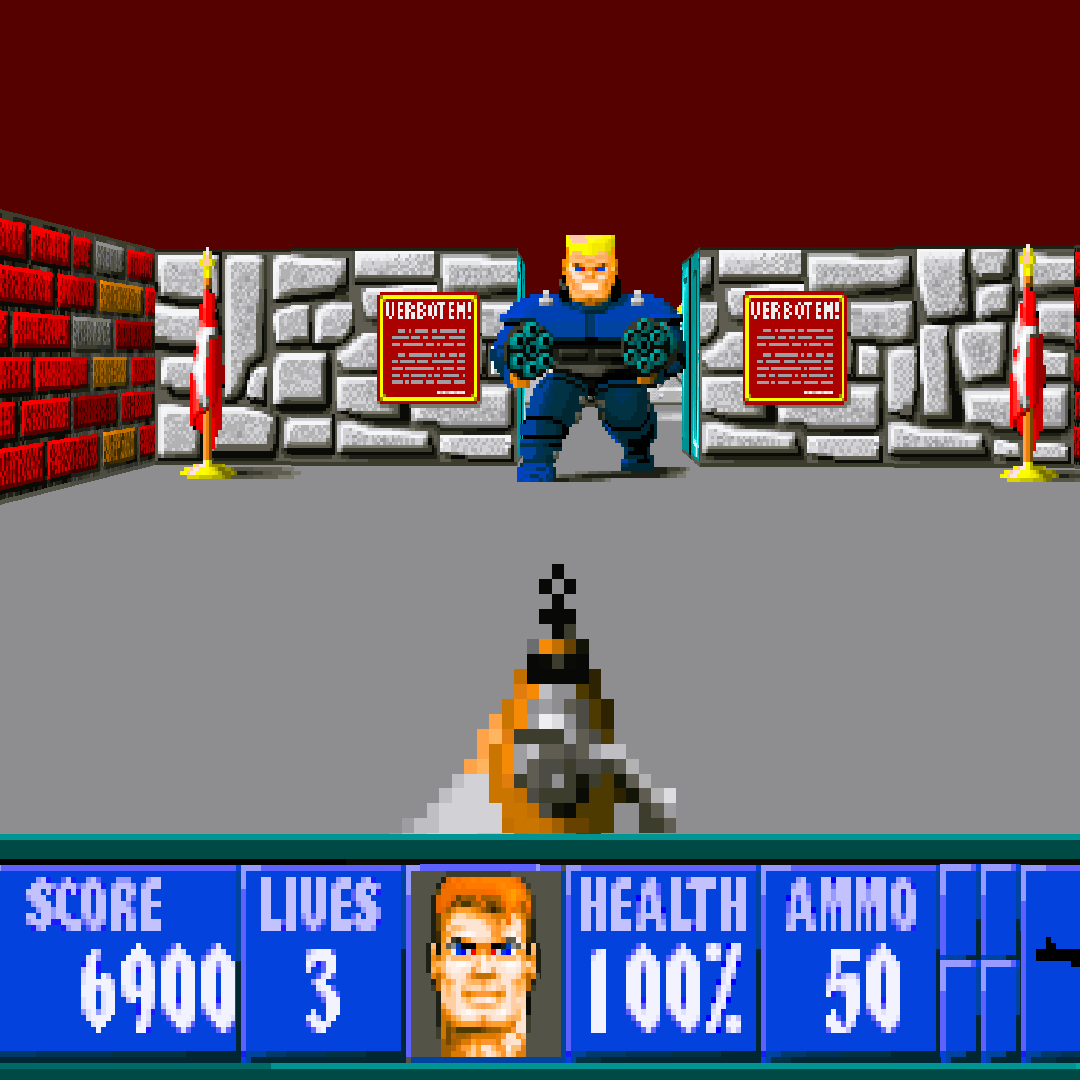
The landscape of 3D gaming truly transformed in the early 1990s. This was largely due to id Software and its brilliant programmer, John Carmack. In 1992, they released Wolfenstein 3D. This game revolutionized first-person shooters. It offered a fast, fluid 3D environment, something unprecedented for its time. Players felt truly immersed in the action.
The following year, id Software launched Doom. This game solidified 3D gaming's place in popular culture. Doom introduced advanced rendering techniques and networked multiplayer. It set new standards for graphic fidelity and gameplay. John Carmack's innovative engine designs were game-changers. They enabled developers worldwide to create their own 3D worlds. His contributions are arguably the most significant in modern 3D gaming.
The Evolution of 3D Graphics
After Doom, 3D gaming exploded in popularity. Graphics cards became essential PC components. Companies like NVIDIA and ATI pushed hardware capabilities. These advancements allowed for more complex models and realistic textures. Games like Quake and Unreal continued to push visual boundaries. They introduced full 3D environments and advanced lighting. The evolution was rapid and constant.
Today, 3D gaming is incredibly sophisticated. Engines like Unreal Engine and Unity empower creators. Virtual reality and augmented reality are taking 3D immersion to new levels. The foundation laid by earlier pioneers continues to inspire innovation. The future of 3D gaming promises even more incredible experiences.
What Others Are Asking? Who Invented 3D Gaming
Who is considered the pioneer of 3D gaming?
While no single inventor exists, **John Carmack** of id Software is often cited as a key pioneer. His work on engines for Wolfenstein 3D and Doom in the early 1990s revolutionized accessible real-time 3D graphics. This made immersive 3D gameplay widespread and influential for future titles.
What was the first commercial video game with 3D graphics?
Atari's arcade game **Battlezone**, released in 1980, is widely considered the first commercial video game featuring true 3D wireframe graphics. Players navigated a tank through a vector-graphic battlefield. This created an impressive sense of depth and realism for its era. It paved the way for future 3D developments.
When did 3D gaming become mainstream?
3D gaming began to become mainstream in the mid-1990s. Titles like **Wolfenstein 3D (1992)** and **Doom (1993)** popularized real-time 3D first-person perspectives. This was further accelerated by consumer graphics cards in the late 1990s. These hardware advancements made complex 3D rendering accessible to home PC users.
How did early 3D games achieve their depth perception?
Early 3D games utilized various techniques for depth perception. **Wireframe graphics**, as seen in Battlezone, drew lines to define objects in 3D space. Later games used **polygonal rendering** with flat-shaded surfaces, like in Virtua Fighter. Clever programming and perspective projection created the illusion of depth before dedicated hardware became common.
What role did id Software play in the development of 3D gaming?
id Software played a monumental role in shaping modern 3D gaming. Through **John Carmack's innovative game engines**, they released Wolfenstein 3D and Doom. These games established the first-person shooter genre and demonstrated powerful, real-time 3D graphics. Their technology significantly influenced countless games and developers for decades, setting industry standards.
FAQ About Who Invented 3D Gaming
Here are some frequently asked questions about who invented 3D gaming, offering quick insights into this pivotal topic.
Who invented 3D gaming?
No single person invented 3D gaming; it resulted from many contributors. Early computer graphics researchers and game developers collectively advanced the technology over decades. This complex history involves numerous innovators.
What defines 3D gaming?
3D gaming refers to video games that create an illusion of depth and three-dimensional space. This allows players to perceive environments and objects with height, width, and depth. It enhances immersion beyond flat 2D visuals.
Why is John Carmack important to 3D gaming?
John Carmack is crucial for his pioneering work on 3D game engines. His innovations for games like Wolfenstein 3D and Doom made real-time 3D graphics widely accessible. He significantly advanced the technical foundations of the genre.
How did 3D gaming evolve over time?
3D gaming evolved from simple wireframe models to complex, textured polygon environments. Advancements in graphics hardware and software engines fueled this progress. Continuous innovation has led to incredibly realistic virtual worlds today.
| Milestone | Year | Key Contribution to 3D Gaming | Pioneers/Companies |
| First Wireframe Arcade Game | 1980 | Battlezone introduces interactive 3D vector graphics. | Atari |
| Early Home Computer 3D | 1984 | Elite offers solid 3D graphics on home systems. | David Braben, Ian Bell |
| Wolfenstein 3D Release | 1992 | Popularizes fast, fluid 3D first-person gameplay. | id Software (John Carmack) |
| Doom Release | 1993 | Establishes modern 3D first-person shooter genre, advanced engine. | id Software (John Carmack) |
| First Full 3D Console Game | 1993 | Virtua Fighter (arcade) showcases 3D polygonal characters. | Sega (Yu Suzuki) |
| Rise of 3D Graphics Cards | Mid-Late 1990s | Enables complex 3D rendering for home PCs. | NVIDIA, 3dfx, ATI |
As you can see, the question of "who invented 3D gaming" leads to a rich tapestry of history. It is a story of countless brilliant minds building upon each other's work. From the earliest vector lines to today's hyper-realistic worlds, the journey is truly remarkable. The continuous pursuit of immersion has shaped the entertainment industry forever. It promises even more exciting innovations in the years to come.
The invention of 3D gaming is not credited to a single individual. It is a cumulative effort across decades. Key contributors include early computer graphics pioneers. Important games like Battlezone and Elite showcased early 3D concepts. John Carmack and id Software revolutionized modern 3D gaming with Wolfenstein 3D and Doom. Hardware advancements, like graphics cards, were also crucial for widespread adoption. The evolution continues with advanced engines and virtual reality.
35




Top 10 Most Anticipated Games Of 2026 What To Watch Out For GAMES IN 2026 . Kalman Filters The Art Of Optimal Estimation Demystified By VITMAS 1*oC MA . TOP 50 BIGGEST NEW Games Coming In 2026 With Crazy NEXT GEN 4K Graphics . 2026 Xbox Game Pass KOREA Xbox Game Pass In 2026 The Full List Of Everything Announced So Far.900x . Download 3d 2026 Digits 4k 2026 Concepts Red Technology Background Thumb 3d 2026 Digits 4k 2026 Concepts Red Technology Background 2026 New Year





Who Invented 3D Modeling A History Of Pioneering . History Of 3D Animation PDF 1. Who Invented Video Games A History Of Video Game Consoles 2026 AdobeStock 293849836 Editorial Use Only . Novedades En Civil 3D 2026 Dise O Gil Preciso Y Conectado Autodesk Inventor 2026 . Futuristic Graphic Design The Year 2026 Premium AI Futuristic Graphic Design Year 2026 996122 194




The First 3D Game A History Of 3D Game Development Quake . Best PC Games 2025 2026 And What To Expect In 2026 New Games 2025 2026 . Autodesk Inventor 2026 2 1 FileCR Image. Download 3d 2026 Silver Digits Black Technology Background 2026 Thumb 3d 2026 Silver Digits Black Technology Background 2026 Concepts Happy New Year 2026 . Who Invented 3D Printing Who Invented The 3d ZIY4



Why Was The Robotic Arm Invented Image. Who Invented The 3rd Person 3D Perspective In Gaming This Behind The . 3d Raycasting Game Doesn T Work MIT App Inventor Help MIT App . Why Was The Robotic Arm Invented Image. Samsung Odyssey G9 6K 3D Gaming Archyde Ai Samsung Odyssey 3d G9



Autodesk Inventor 2026 2 1 FileCR Scr6 AutoDesk Inventor Free Download . Best Best Budget Pc Speakers Of 2026 Review Comparison 81PdWvZcOBL . Autodesk Inventor 2026 2 1 FileCR Scr7 AutoDesk Inventor Free Download . Autodesk Inventor 2026 2 1 FileCR Scr4 AutoDesk Inventor Free Download . 2026 Digits Futurism Art 2026 3d Metal Digits 2026 New Thumb2 2026 Digits Futurism Art 2026 3d Metal Digits 2026 New Year 2026 Concepts



New Year 2026 Creative Design Concept 3D Rendered Image Stock Photo New Year 2026 Creative Design Concept 3d Rendered Image 3BJDKBA . Red Magic Gaming Laptop 16 PRO 2026 Red Magic Gaming Laptop 16 PRO 2026 74474549hdx . Who Invented 3D Printing Who Invented The 3d CFT1 . Download 3d 2026 Digits Golden Technology Background 2026 New Year Thumb 3d 2026 Digits Golden Technology Background 2026 New Year 3d 2026 Golden Digits 2026 Concepts . History Of 3d Computer Graphics Wolfenstein 3D Modern 1




AMD S 3D V Cache Is Still The Best Gaming Upgrade Money Can Buy Amd Ryzen 7 9850x3d On Plant . Download 2026 3d Digits 4k 2026 Concepts 2026 Metal Digits Green Thumb2 2026 3d Digits 4k 2026 Concepts 2026 Metal Digits Green Neon Lights . Inventor Features New Features 2026 Autodesk Key Features Of Inventor Large 1920x1038 . First 3D Game A History Of 3D Game Development Tomb Raider 1024x576 . TOP 21 NEW Upcoming Games Of 2026 YouTube